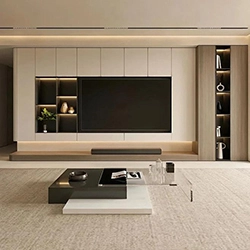
Introduction to Translucent Stone
Translucent stone is an emerging decorative material in the construction industry, favored by designers for its unique light-transmitting properties and stylish appearance. This innovative material has become a new favorite among architects due to its distinctive ability to create ambiance and its eco-friendly characteristics, making it stand out in the field of architectural decoration.
Manufacturing Process and Environmental Properties
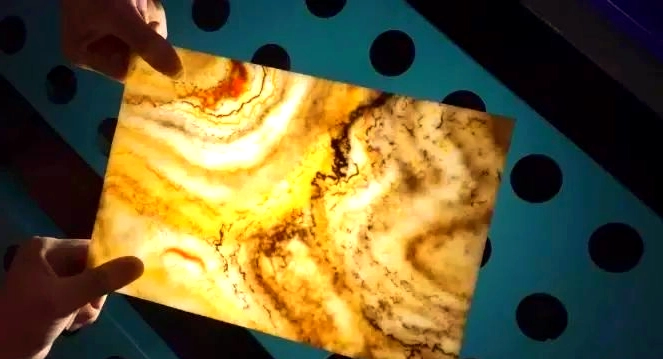
Translucent Stone, this innovative composite material, is meticulously crafted using polymer-based materials. Its manufacturing process resembles that of natural marble and jade, employing translucent composite materials (such as fibers) to enhance its light transmission properties. When illuminated, Translucent Stone exhibits a unique aesthetic that rivals natural stone. Crafted from polymer materials combined with translucent composites, translucent stone possesses outstanding eco-friendly properties including pollution-free composition and corrosion resistance. Translucent stone, this innovative composite material, embodies the essence of polymer technology. Its manufacturing process closely mirrors that of natural marble and jade, utilizing translucent composite materials (such as fibers) to enhance its light-transmitting properties. When illuminated, translucent stone radiates a captivating glow that rivals that of natural stone.
Translucent Stone Applications
Translucent stone has garnered significant attention in the building materials market due to its numerous advantages. It boasts exceptional performance and high strength while offering eco-friendly properties such as pollution-free, radiation-free, non-toxic, and non-flammable characteristics. Additionally, translucent stone is oil-resistant, stain-resistant, corrosion-resistant, has low water absorption, prevents staining, and features antibacterial and anti-mold properties. It is also wear-resistant, impact-resistant, and easy to maintain. Translucent stone can be applied in diverse architectural and decorative settings. Its flexible form and light-transmitting properties offer designers abundant creative possibilities.
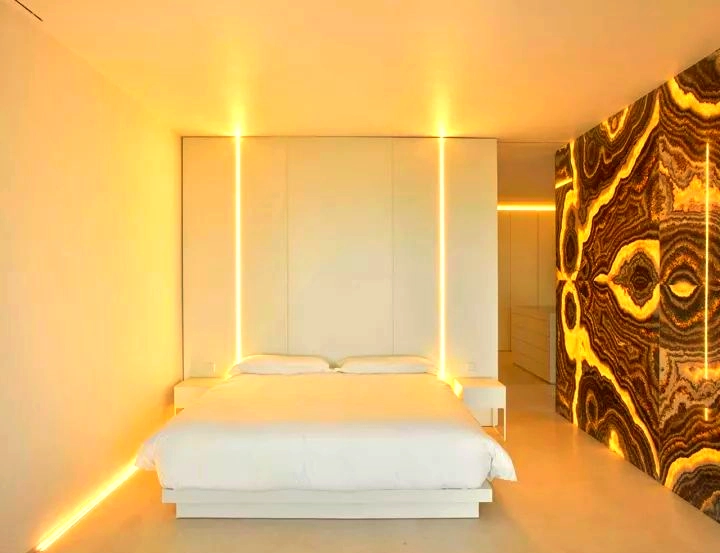
The applications of translucent stone include wall decoration, ceiling installations, translucent feature walls, lighting design, and translucent countertops. By transmitting light, translucent stone creates a dreamlike effect—crystal clear with dynamic, ever-changing patterns.
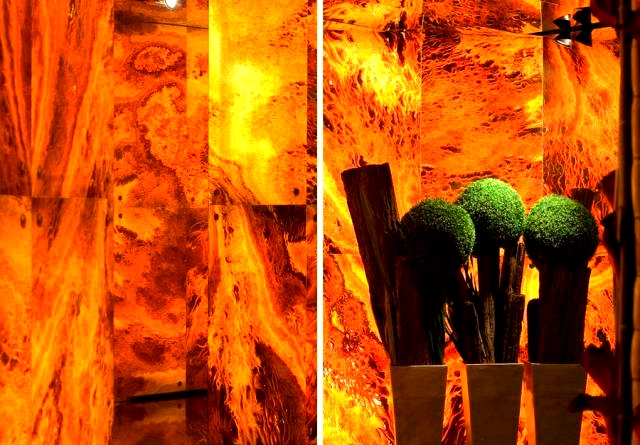
Design Inspiration and Application Examples
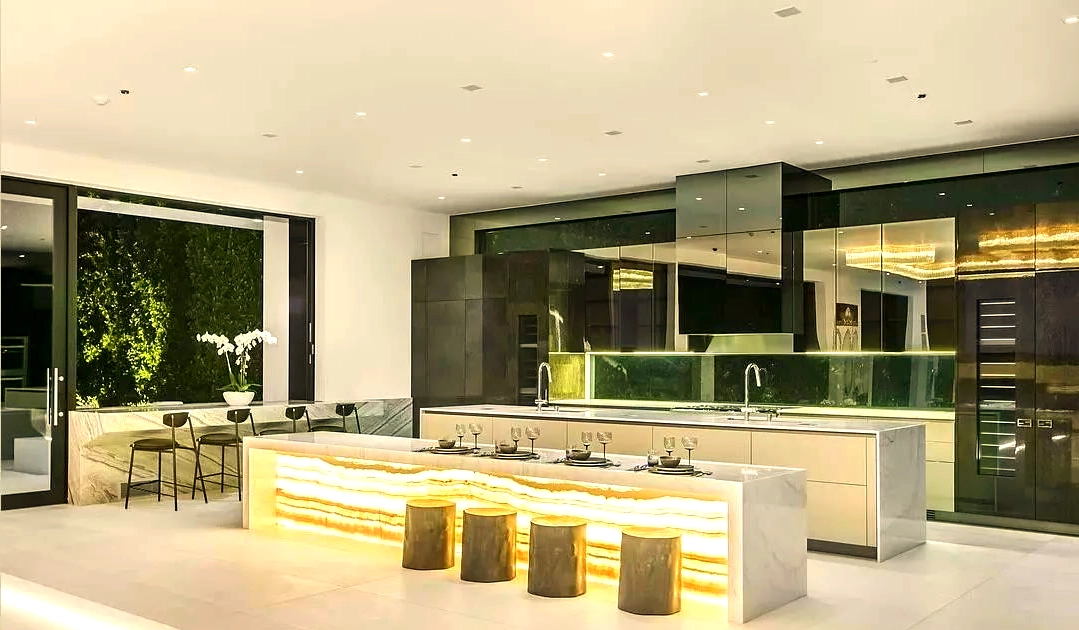
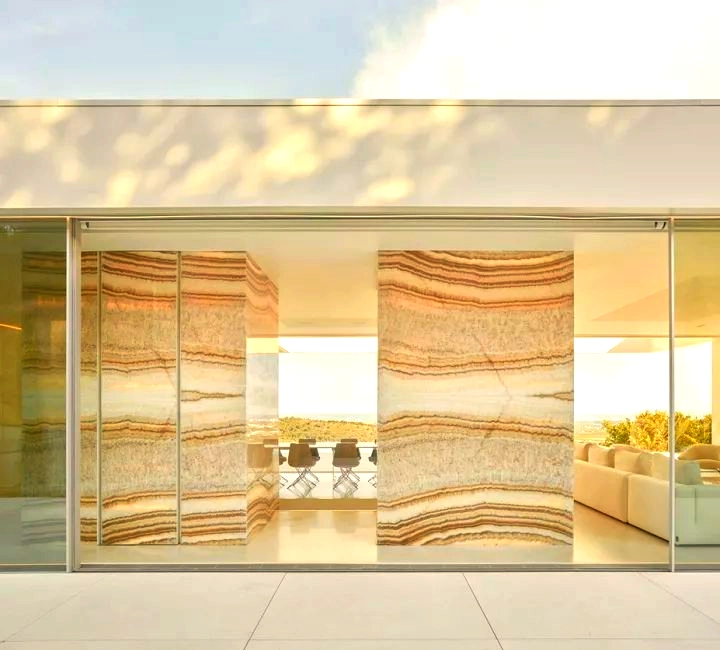
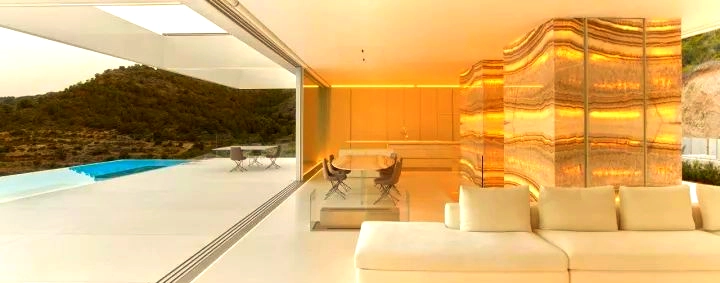
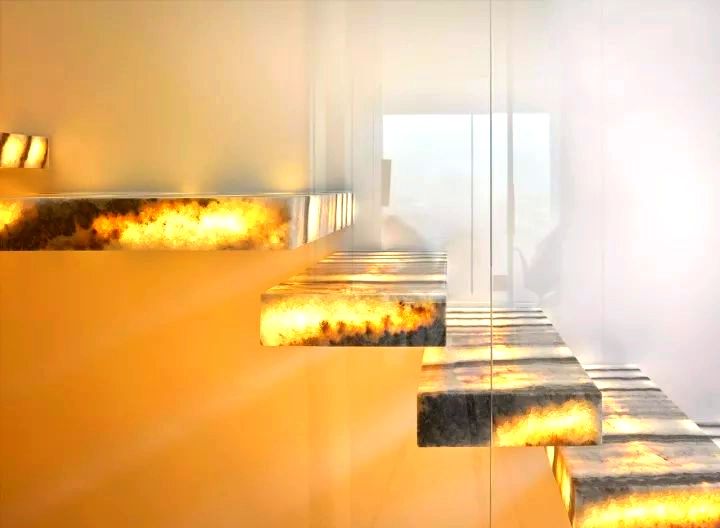
The design of translucent stone draws inspiration from modern architecture's pursuit of new materials and innovative technologies. It not only enhances the visual impact of architectural decoration but also showcases its elegance in numerous renowned design projects. At Casa de la Cantera in Valencia, Spain, translucent stone is artfully incorporated into staircases and living room accent walls, seamlessly integrating with the minimalist design aesthetic to embody timeless sophistication. In a Beverly Hills villa in the United States, translucent stone was similarly employed for dining table and countertop finishes, demonstrating its broad applicability in contemporary design. Used in multiple renowned design projects such as Spain's Casa de la Cantera and the Beverly Hills villa, translucent stone showcases its versatility within modern design contexts.
Detailed Construction Procedures
The installation process of translucent stone requires exceptional craftsmanship to ensure both safety and aesthetic appeal. When installing translucent stone on walls, the first step involves preparing the base layer by laying 5mm plywood and arranging the lighting lines to secure the light tubes. Next, based on the thickness specifications of the selected marble slabs, weld angle iron structures onto the wall surface, ensuring they are aligned vertically. Subsequently, drill holes at the top and bottom of each marble slab and securely fasten them to the structural framework using specialized marble components to prevent detachment. Finally, apply marble adhesive for additional reinforcement, ensuring the installation's stability. The construction of translucent stone involves multiple steps, including substrate preparation, lighting fixture layout, and marble component installation.

应用实例
Translucent stone finds practical application in various architectural projects, such as sales offices, restaurants, and exhibition centers, showcasing its diverse design and application potential. At the sales office of Sanya Huahao Yalongfu, designers ingeniously employed translucent marble as a feature wall, creating an atmosphere of grandeur and elegance.
In the home of a New York antique dealer, designer John Pawson combined translucent stone with clean wall treatments to create a crisp, distinctly modern space.
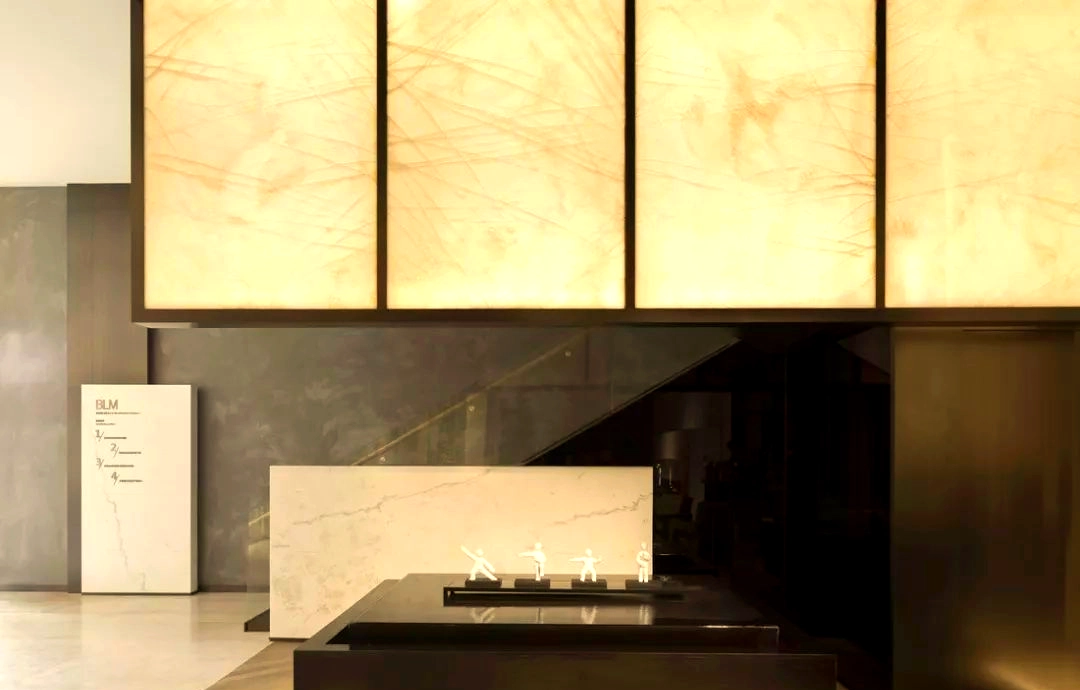
At the BLM Doors and Windows showroom in Guangzhou, translucent stone was employed in the stairwell's screen design, cleverly dividing the space while enhancing privacy.
These application examples not only demonstrate the versatility and design flexibility of translucent stone but also showcase its potential and possibilities across diverse architectural projects.